Art as Ecological Witness
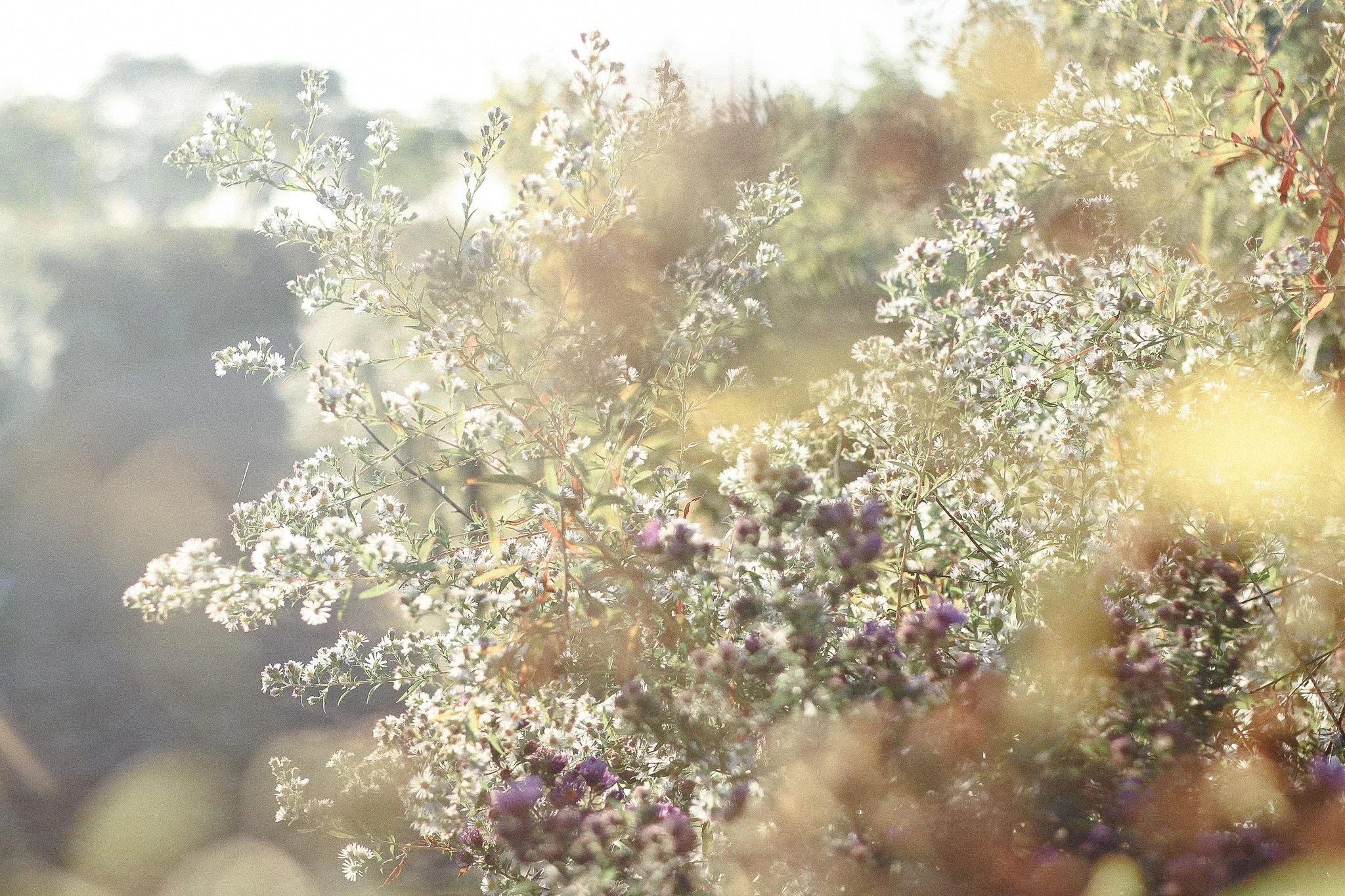
Those who paint nature are the ones who notice the slow turning of the seasons, the subtle changes that often slip by unseen. To most, there are four seasons; to us, there are a hundred quiet thresholds in between.
We notice the way a meadow shifts hue not just from summer to autumn, but from one week to the next. The way a cluster of grasses bends more heavily in late October, the way goldenrod begins to open against the fading greens. The artist’s eye learns the language of subtlety and of time measured not by clocks, but by color, texture, and light.
To paint the natural world is to be in constant conversation with it. It’s to hold fascination for the details: the texture of wilted flowers, the arch of a blade of grass. Each brushstroke becomes a small act of worship and a way of saying: I see you. I appreciate you.
My own work often leads me to the meadows: to wide, breathing landscapes that change with astonishing gentleness. I return to them again and again and again. I am drawn to the stillness and movement, and their refusal to stay the same. In them, I see the entire story of the earth unfolding: the budding, blooming and falling; the decay and renewal, and the endless cycle of nature.
The resulting artwork is like a form of remembering. It does not simply record what is beautiful but instead pays homage to it. It honors the earth not through imitation, but through attention. And perhaps that is the artist’s purpose: to slow down enough to see what most people pass by and to remind others, through art, of the beauty available to them no matter the season.